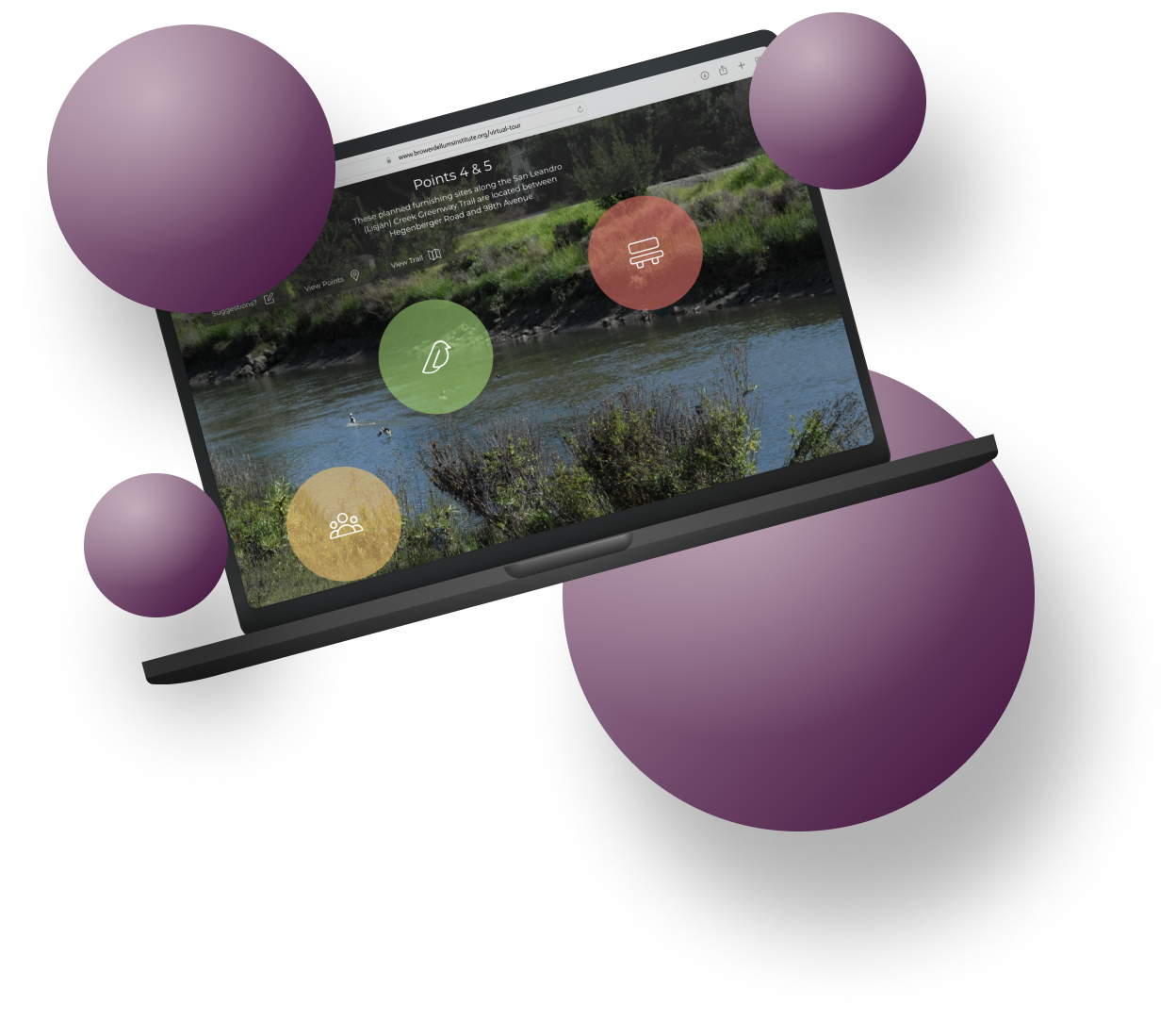
Virtual Tour for Community Engagement in East Oakland
The project aimed to empower East Oakland residents by creating a platform for them to design and install benches along a new creek greenway trail. The challenge was to drive community involvement by offering an experience that aligned with residents' motivations—education and cultural preservation.
My Role: UX Researcher and Designer
Tools Used: Figma, Adobe XD, Miro (for journey mapping)
Community-Driven Design:
The Journey to Engagement
Background
The project began as a collaboration with a nonprofit aiming to engage the East Oakland community in a greenway project along a creek. They sought to make the community a part of the design and installation process, focusing on the placement and style of benches along the trail. However, the primary audience was unclear at first, which made it difficult to identify the most impactful design approach. The nonprofit’s question was, "How can we improve community engagement in this project?"
Understanding Community Needs: Insights & Barriers
Research
User Focus
Who are the primary users, and what motivates their engagement?
What barriers do residents face in accessing and participating in community projects?
Methods

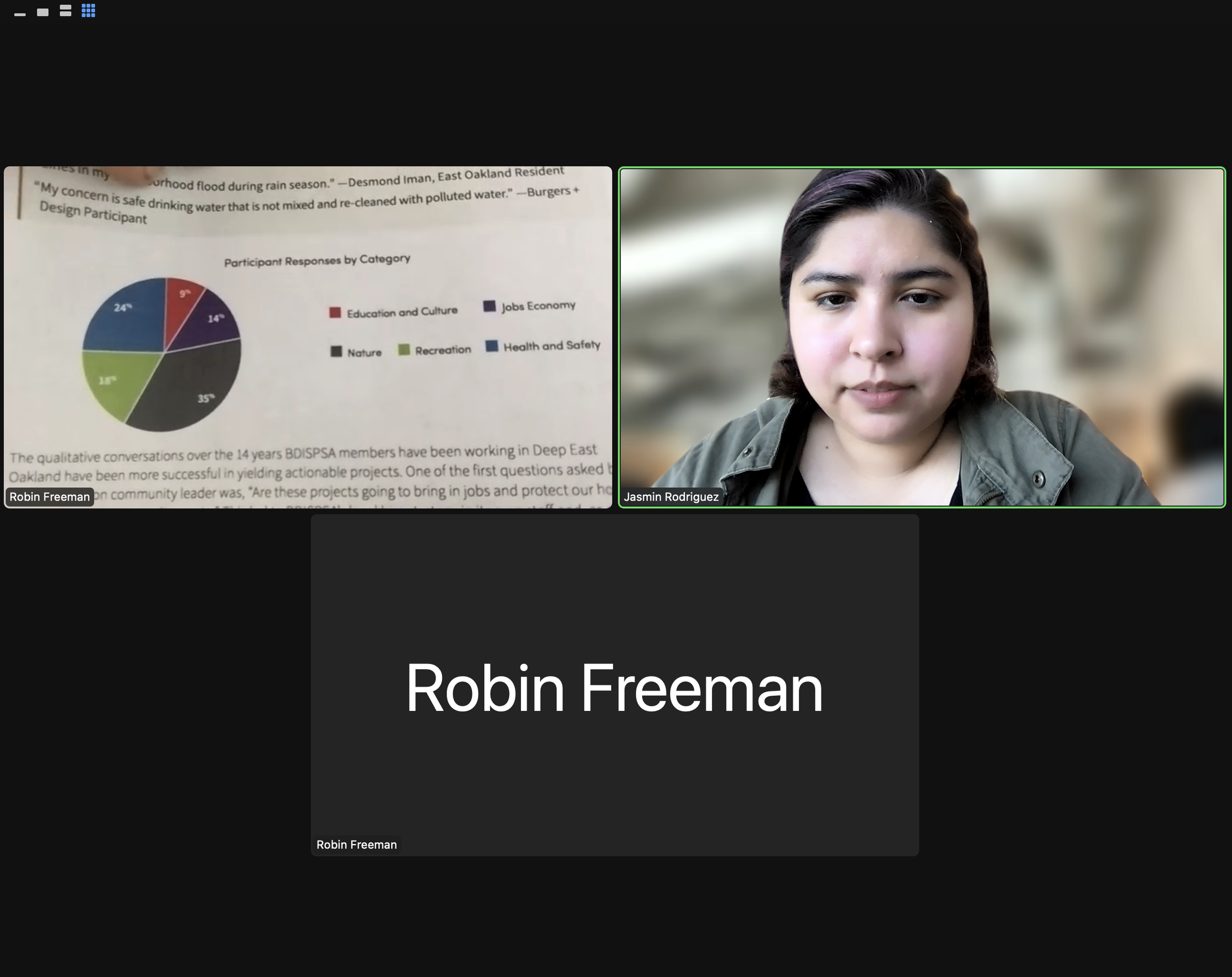
Stakeholder Interviews
Conducted with the nonprofit’s representatives to understand their mission and objectives.

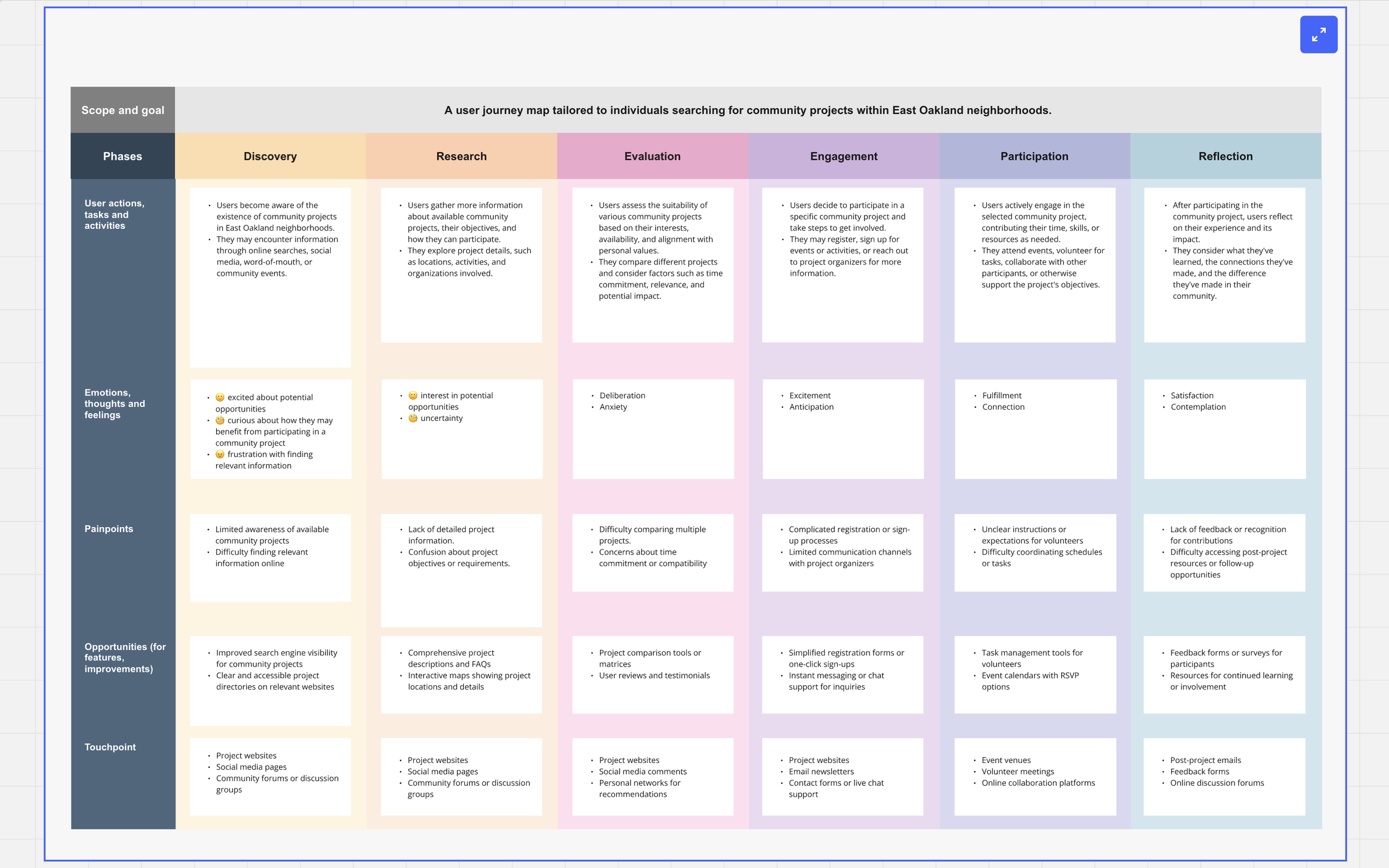
Journey Mapping
Developed user journeys to analyze how East Oakland residents might access information about the greenway project.

Competitor Analysis
Explored digital community engagement tools used by similar nonprofits.
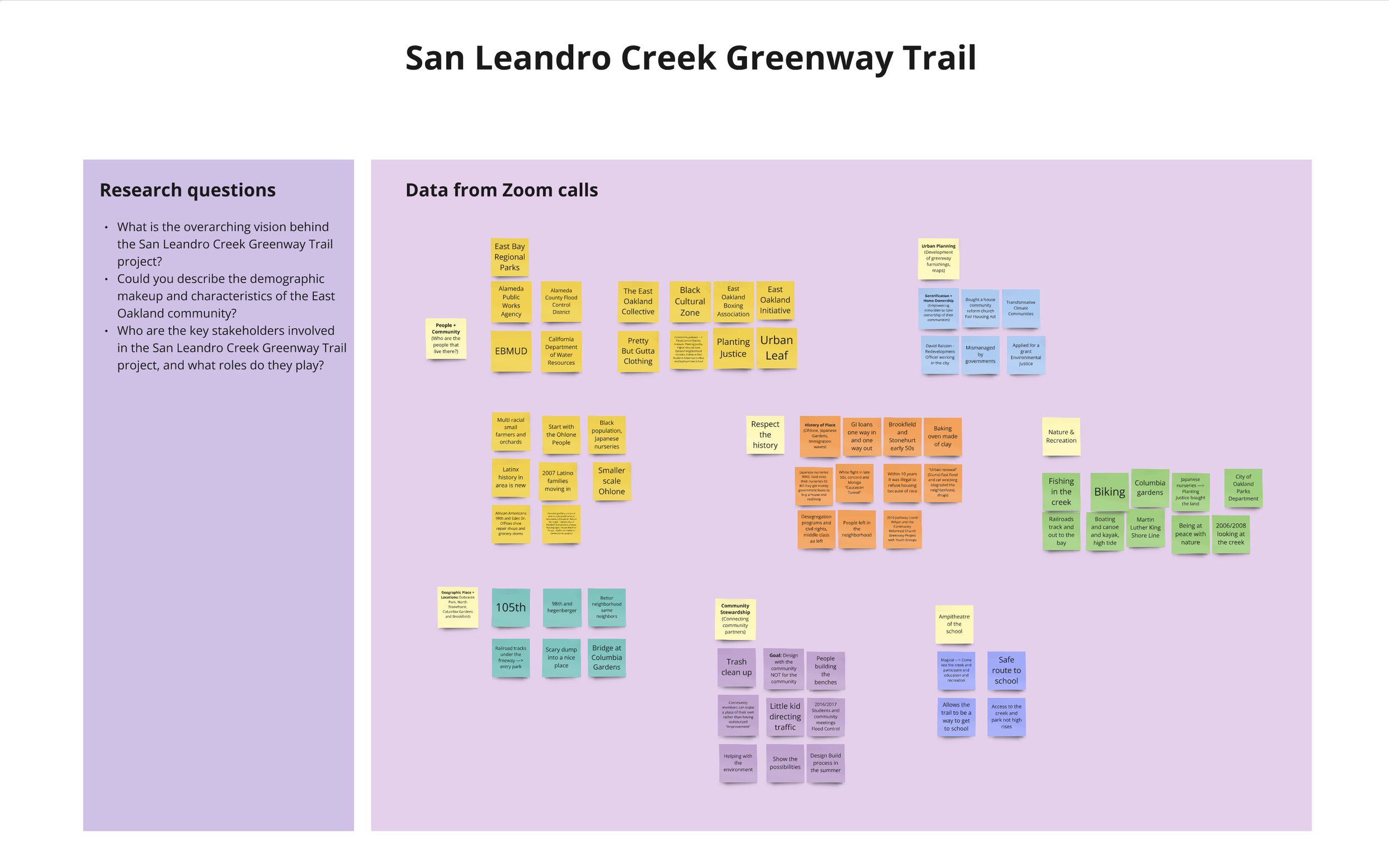
Key Insights

Target Audience
Through stakeholder discussions, I confirmed the primary audience as East Oakland residents, not government agencies or other nonprofits.

Motivators
Journey mapping revealed that education about local history and cultural preservation are crucial engagement drivers for residents.

Barriers
Many residents may lack easy access to community events, so a digital solution could effectively reach a wider audience.
Problem Statement
How might we use a digital platform to increase East Oakland residents' engagement with the greenway project by focusing on education and cultural preservation?
Solution Ideation
Designing a Virtual Creek Tour to Educate, Engage, and Preserve
Based on our findings, I proposed a virtual tour of the creek greenway. This digital experience would:
Educate users on local history and ecology.
Involve residents by allowing them to visualize and view bench designs.
Preserve cultural elements by highlighting significant cultural landmarks along the creek.
Solution
Pivot
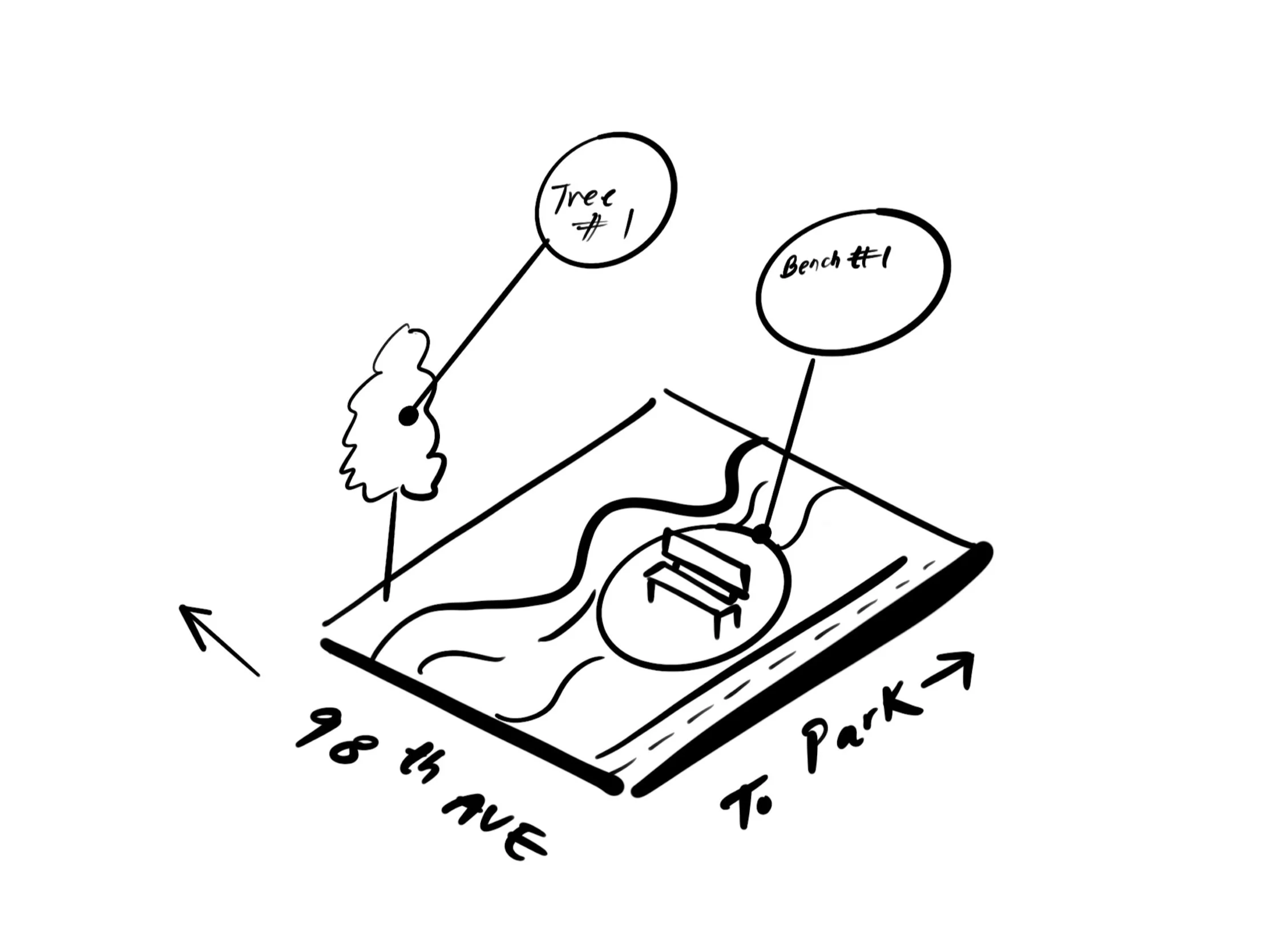
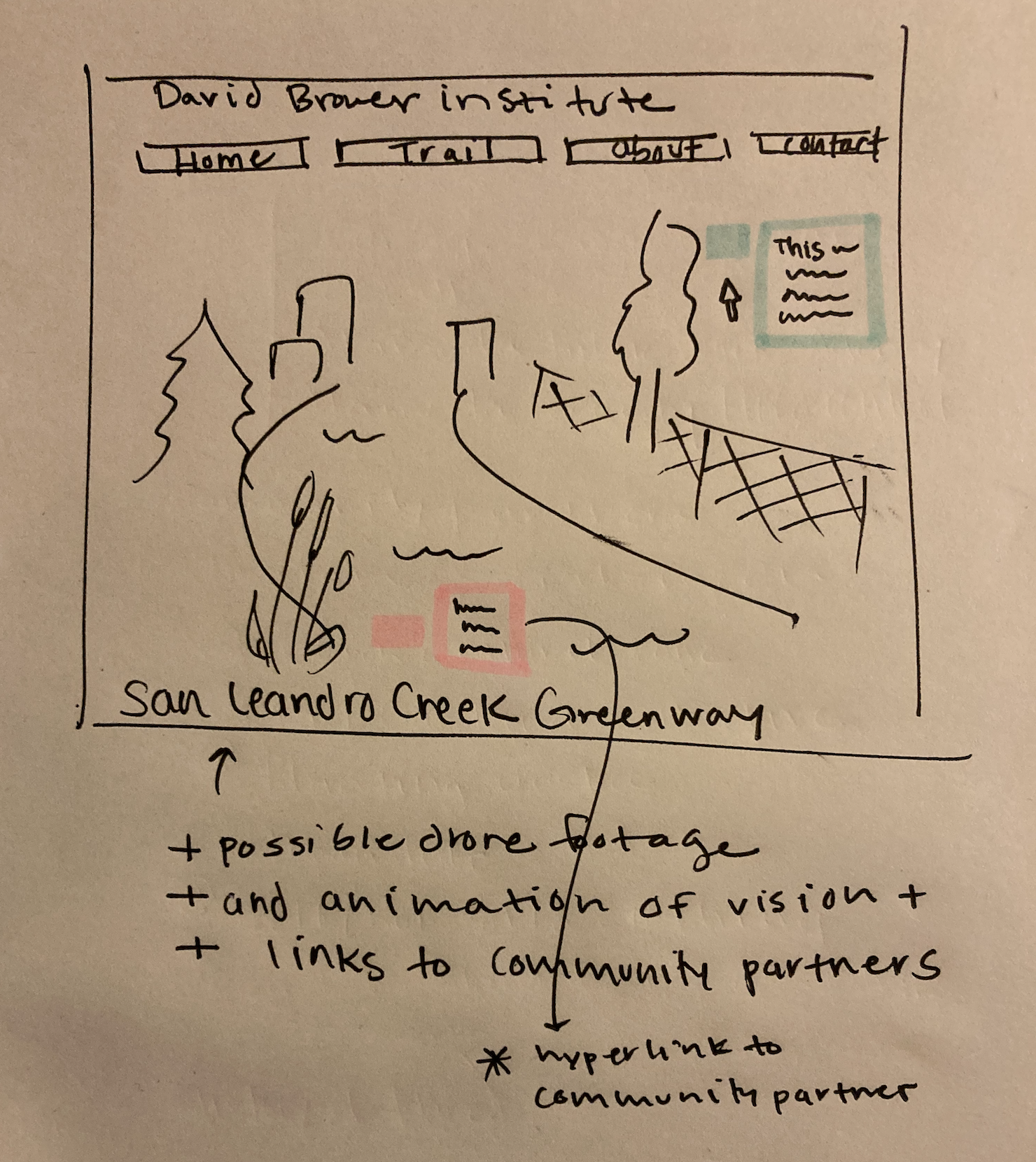
Pivot from a 3D to 2D digitl platform based on feedback from users and stakeholders.
A 3D virtual tour was deemed infeasible due to limited high-speed internet access and the nonprofit's lack of programmers to render the proposed 3D images. However, the idea received strong user approval and was greenlit. As a result, the design process will proceed with a focus on 2D solutions.
Design Process
Wireframes and User Flows for Seamless Exploration
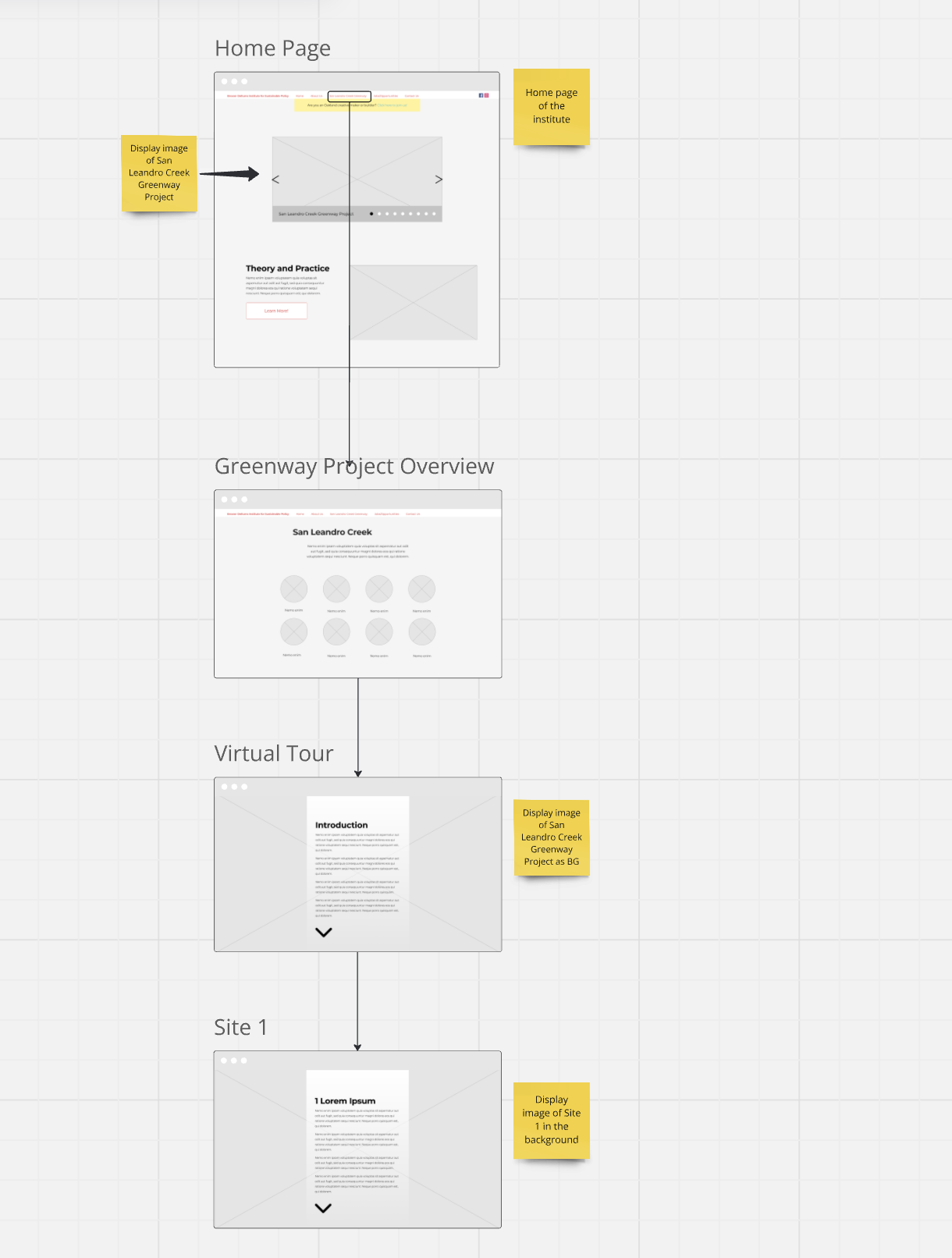
I designed wireframes to reflect the flow from awareness to engagement. The user journey starts with an educational introduction to the project, followed by interactive features allowing users to explore, learn about, and engage with the greenway trail.
Prototyping and Testing
Once the wireframes were refined, I developed a high-fidelity prototype of the virtual tour. I conducted usability testing with sample users from East Oakland, collecting feedback on the intuitiveness, content clarity, and engagement levels.
Design Highlights
Interactive Map: Allows users to “walk” through the greenway, view potential bench locations, and access information on cultural landmarks.
Feedback Form: Residents can provide feedback on bench designs, making them active participants.
Historical Markers: Includes educational pop-ups on East Oakland’s cultural history, reinforcing the connection to place.
Outcome & Reflections
The virtual tour concept was well-received in user testing, with participants expressing excitement about a digital space where they could learn and contribute to their community. This project taught me the importance of thorough user research and adapting the project based on community values. Transitioning from research to a digital solution underscored how crucial it is to connect insights to a design that is not only practical but also meaningful.